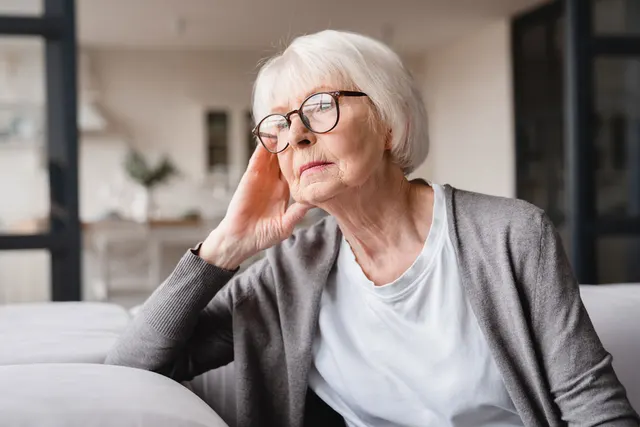
As GLP-1 use grows, so do questions about how weight, body image and social pressure shape the way people approach treatment
The late Dolly Parton has long been celebrated for her disarming honesty regarding public appearance and aging. Parton famously poked fun at her own cosmetic procedures, once declaring, “If something is bagging, sagging or dragging, I’ll tuck it, suck it or pluck it.” Yet beneath the humor lay a relatable truth about the relentless societal pressure of public appearance—a pressure that once led her to admit that weight gain eroded her self-confidence and affected the way she saw herself.
Mikaela Spooner, PhD, a licensed psychologist at the Texas A&M Health Telehealth Institute, said the media people consume can shape how they view their bodies and the expectations they place on themselves.
“If we are consuming media that portrays certain appearances or expectations, it can be really impactful, because we know social media is mostly curated and not always realistic,” she said.
Entering this conversation about weight and self-image are GLP-1 receptor agonists, which have steadily moved from medications used to treat chronic conditions into popular culture surrounding weight, appearance and body image.
While these medications can be highly effective for their approved medical uses, their growing visibility as weight-loss drugs is changing the conversation around what weight means—and what losing weight says about a person.
How much does weight shape the way we see ourselves?
The psychology surrounding weight loss can be more complicated when a person’s appearance becomes tied to their self-worth.
Spooner said anxiety can sometimes lead people to believe they need to take action to pacify an uncomfortable feeling.
“Anxiety can manifest in our thoughts to convince us that we need to be doing something in order to feel better or to avoid whatever is making us anxious instead of engaging in external processing or more adaptive coping skills,” she said.
Value tied in with appearance can become particularly difficult to navigate when people are surrounded by images of bodies that are presented as attainable but may not reflect reality.
“People may feel pressure to engage in certain eating habits that may actually be harmful out of a desire to reach body standards that might not even be real,” Spooner said, pointing to increasingly sophisticated editing apps and artificial intelligence platforms.
Effort to meet the idealized standards also invites an additional pressure on what choices and actions are made to meet them.
“People may begin evaluating their self-worth based on how their body looks or other physical features,” Spooner said.
According to Cleveland Clinic, social media can play a role in that process, but Spooner said the issue isn’t necessarily how much time someone spends online.
“When we talk about social media playing a negative role, it’s less about how many hours spent and more about what we are consuming on social media,” she said.
Why does taking a GLP-1 feel like something to hide?
Weight stigma can make the decision to seek treatment feel even more vulnerable, according to BMC Medicine.
People who use GLP-1 medications can face criticism that they are taking an easier route to weight loss or have not earned the changes in their bodies. In that view, losing weight is not just about the result—the method becomes evidence of how much discipline or willpower someone has. According to the American Medical Journal, two-thirds of people keep the use of weight-loss medications to themselves.
“They might not feel comfortable sharing with people what they’re doing, which becomes isolating,” Spooner said.
Robert O. Carpenter, a board-certified general surgeon and clinical professor at Texas A&M University Naresh K. Vashisht College of Medicine at Texas A&M Health, has heard similar reactions from patients.
“These folks consistently will say, ‘They’re cheating and didn’t really have to work to do this,’” Carpenter said. “Those are not only biases; they are incredibly painful and psychologically hurtful.”
Carpenter, a longstanding public health advocate for improving access to high-quality obesity care among all patients with a focus on compassion, affordability, and sustained results, said the criticism can be particularly painful because it reduces weight loss to a measure of effort, while overlooking the health concerns that can accompany obesity. Obesity is associated with conditions including high blood pressure, diabetes and sleep apnea, making weight management a medical issue for many people.
At the same time, the social meaning attached to weight can make it difficult to separate health from appearance. When both a person’s body and the way they change it become tied to self-worth, seeking treatment can feel like a judgment of character rather than a medical decision. A person seeking treatment may be responding to medical concerns, social pressure, personal goals or some combination of the three.
Can treatment change more than a number on the scale?
Carpenter doesn’t only understand that tension from his work with patients. He has experienced it himself.
Despite spending his career as a bariatric surgeon and advocating for patients with obesity, he found himself struggling with his own health as he entered his fifties. Suffering from joint issues that restricted exercise, his weight climbed, placing his BMI squarely in the obesity category alongside worsening hypertension, sleep apnea and high cholesterol, he said.
Seeking treatment required him to confront some of the same vulnerability he had seen in his patients—and challenged the idea that using medication reflects a lack of strength.
“It took immense willpower to admit I had a problem, talk to my physician, and go through the approval process,” he said.
After beginning a GLP-1 medication, Carpenter lost 30 pounds and found that physical activity became possible again. Earlier this year, he completed a 12.4-mile U.S. Army Ruck March, carrying a 23-pound pack in three hours—lapping active-duty service members in the process.
“It’s not the medications that did that for me,” Carpenter said. “It’s the medications that actually made it so that the other problems that were preventing me from doing that shrank.”
His experience, along with countless other lives changed by GLP-1 medications, challenges the narrative that the way someone loses weight should determine any value of a person.
“I can say, as a physician, as an educator, as a bariatric surgeon and as an advocate that these drugs are not bad,” Carpenter said. “They are unbelievably helpful when applied appropriately.”