Typically cancer researchers discover new targets and drugs through new insights that allow them to understand how cancer cells works. After they are able to design new strategies to stop or reverse the effects of cancer cells using several technologies such molecular biology, biochemistry, cell biology, immunology and pathology. At this point in the process thousands of compounds may be potential candidates for development. Before testing a drug in people researchers should find out whether it has the potential to cause toxicity. To solve this problem there are two types of preclinical studies: in vitro and in vivo experiments. Commonly pre clinical studies are not broad but they provide detailed information on dosing range and toxicity levels. Once researchers identify a potential drug they drives some experiments to collect information on absorption, distribution, metabolization and excretion, best dosage, mechanism of action, the best way to delivery, side effects, interaction with other drugs and it is effectiveness as compared with similar drugs. After these preclinical research answers basic questions the next steps are verified on human body. Clinical research refers to studies or trials that are done in people. Clinical trials are key to developing new strategies to find and diagnose cancer, to prevent, manage symptoms and to treat cancer. There are designed to evaluate outcomes of human subjects under research and experimental conditions. The aims of these studies define whether a medical strategy or treatment is safe for application or consumption by humans. The effect of clinical trial not only enhances to the individual patient by improving a broader selection of powerful therapies as well as to society as a whole by enhancing the value of health care. It is not truth that clinical trials are only designed for people who have advanced cancer that is not responding to treatment.
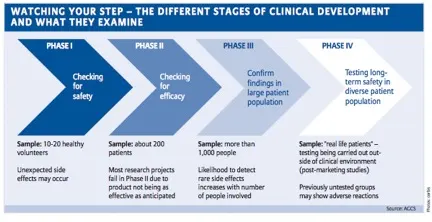
According to U.S National Institute of Health there are some common reasons for conducting clinical studies: Evaluating one or more interventions (for example, drugs, medical devices, approaches to surgery or radiation therapy) for treating a disease, syndrome, or condition, finding ways to prevent the initial development or recurrence of a disease or condition. These can include medicines, vaccines, or lifestyle changes, among other approaches, evaluating one or more interventions aimed at identifying or diagnosing a particular disease or condition, examining methods for identifying a condition or the risk factors for that condition, exploring and measuring ways to improve the comfort and quality of life through supportive care for people with a chronic illness. Drug developers or sponsors must submit as Investigational New Drug (IND) application to FDA before beginning clinical research. To start, every clinical trial should be led by a principal investigator who is often a medical doctor, research team, human volunteers (participants) and a plan for the trial (protocol). This protocol contains information about the reason for doing the trial, who can join the trial (eligibility requirements), how many people are needed for the trial, what types of information will be collected and what medical tests will be done. Clinical trials used in drug development are sometimes described by phase and the FDA defines these phases. Each phase is designed to answer a several research question. There are 4 phases: According to FDA, Phase I: Purpose – Safety and dosage. Researchers test a new drug or treatment in a small group of people (20 to 100 healthy volunteers or people with the disease/condition) and can takes several months; Phase II: Purpose – Efficacy and side effects. The drug or treatment is given to a large group of people (up to several hundred people with the disease/condition) and can takes several months to 2 years; Phase III – Efficacy and monitoring of adverse reactions. The drug or treatment is given to a large groups of people (300 to 3,000 volunteers who have disease or condition) to confirm it is effectiveness, monitor side effects, compare it to commonly used treatments and collect information that will allow the drug treatment to be used safely and Phase IV: Purpose – Safety and efficacy. Studies are done after the drug or treatment has been marketed to collect information and side effects associated with long-term use (Several thousand volunteers who have the disease/condition). Find a clinical trial accessing www.cancer.gov.